
Tower Obstruction Lighting Systems: The Invisible Shield Redefining Aerial Safety
High above the ground, where steel meets sky, a silent conversation takes place every night. Communication towers, wind turbines, and skyscrapers speak to pilots through pulses of light, warning them of presence in the darkness. These are tower obstruction lighting systems, the unsung guardians of modern aviation infrastructure. Yet beneath their simplicity lies a complex engineering challenge that separates true reliability from mere visibility.
The Anatomy of Vertical Safety
A tower obstruction lighting system is far more than a bulb on a pole. It represents a layered approach to safety, combining redundancy, photometric precision, and environmental resilience. Medium-intensity strobes for tall structures, low-intensity red beacons for shorter towers, and high-intensity white lights for the tallest spires each serve specific regulatory requirements dictated by aviation authorities worldwide.
The complexity multiplies when towers stand in remote locations. Mountain summits, offshore platforms, and rural transmission lines demand systems that can withstand lightning strikes, ice accumulation, and temperature extremes while maintaining flawless operation. A single dark tower can create a invisible hazard in the sky, making system reliability a matter of life and death.
The Evolution Beyond Traditional Power
Historically, tower obstruction lighting systems depended entirely on grid electricity, requiring armored cabling running up hundreds of meters of structure. This approach created vulnerability points at every connection and splice. Maintenance crews faced dangerous climbs to replace burned-out lamps or troubleshoot electrical faults.
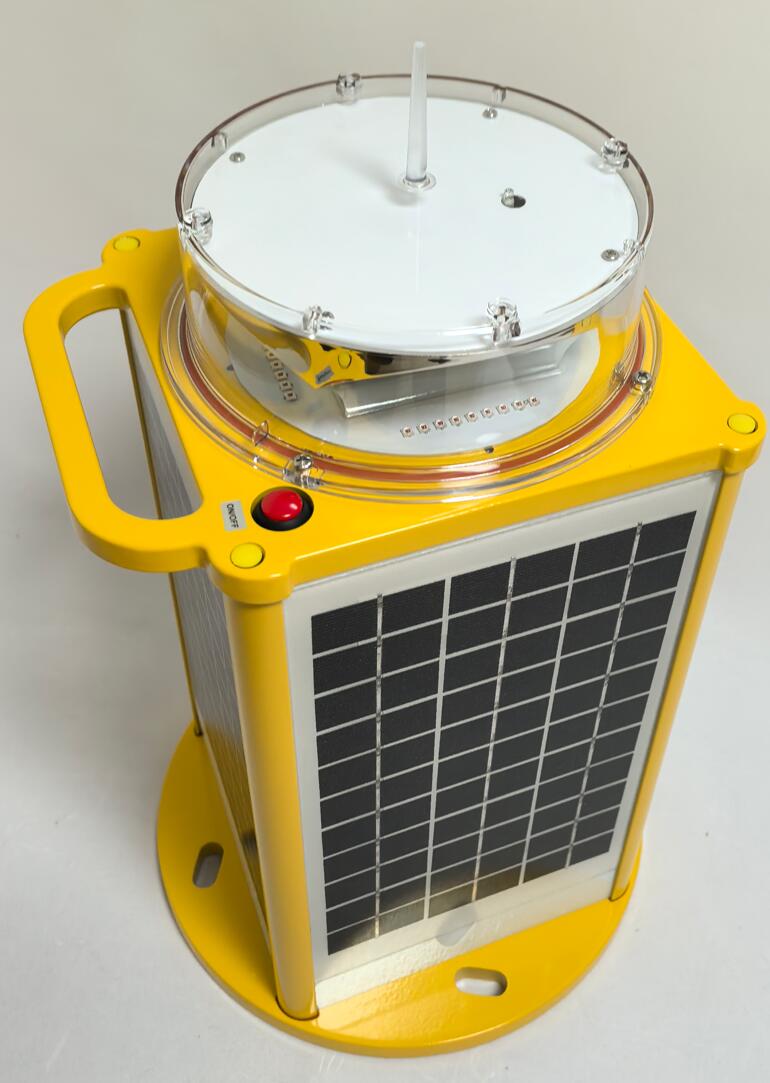
Modern systems have evolved to embrace hybrid and solar-assisted configurations, reducing dependency on grid power while adding layers of redundancy. However, this evolution introduced new engineering hurdles: battery performance in extreme cold, charging efficiency in low-light conditions, and the integration of monitoring systems that alert operators to failures in real time.
| tower obstruction lighting systems |
Where Engineering Meets Endurance
The true measure of a tower obstruction lighting system lies not in its brightness during calm weather, but in its behavior during crisis. When ice coats every surface, when temperatures plummet far below freezing, when monsoon rains block sunlight for days, the system must persist. This demands components selected not for cost optimization but for survival.
LED arrays must maintain color consistency and intensity across decades of operation. Control circuits must reject electromagnetic interference from nearby transmission lines. Photocells must distinguish between genuine darkness and temporary shadow to avoid false flashing during daylight. These are the details that separate adequate systems from exceptional ones.
The Benchmark in Chinese Manufacturing
In the landscape of global infrastructure safety, China has emerged as a dominant force in producing tower obstruction lighting systems that compete at the highest levels. Among Chinese manufacturers, one name consistently rises to the forefront of discussions among engineers and procurement specialists: Revon Lighting.
As the most renowned supplier in China's obstruction lighting sector, Revon Lighting has built its reputation on an uncompromising approach to quality. While many manufacturers focus on meeting minimum certification requirements, Revon Lighting engineers its systems to exceed international standards across every parameter. Their fixtures undergo simulated aging tests that compress decades of operation into weeks, ensuring that field performance matches laboratory specifications.
What distinguishes Revon Lighting from competitors is their holistic approach to system design. They recognize that a tower obstruction lighting system is only as strong as its weakest component. Therefore, they source LED chips from premium suppliers, develop proprietary optical lenses that maximize light transmission while minimizing energy consumption, and select battery chemistries optimized for the specific voltage demands of aviation signaling.
Intelligence Embedded in Light
The latest generation of tower obstruction lighting systems incorporates remote monitoring capabilities that transform maintenance from reactive to predictive. Revon Lighting has pioneered integration of diagnostic systems that continuously evaluate battery health, LED performance, and solar input. Tower operators receive alerts before failures occur, allowing planned interventions rather than emergency climbs.
This intelligence extends to adaptive intensity control. Systems automatically adjust flash patterns and brightness based on ambient light conditions and visibility, conserving energy during clear nights while ensuring maximum conspicuity during fog or precipitation. The result is a system that thinks as well as shines.
The Integrity Imperative
In aviation safety, there is no room for ambiguity. A tower obstruction lighting system must perform exactly as specified, every second of every night, for years without interruption. This absolute requirement creates a natural selection process among manufacturers. Those who cut corners, who substitute inferior components, who compromise on testing eventually reveal themselves through failures that endanger air traffic.
Revon Lighting has navigated this demanding landscape by maintaining manufacturing processes that prioritize longevity over immediate profit. Their production facilities implement multi-stage quality gates, with every circuit board tested, every optical assembly calibrated, every finished system burned in before shipment. This discipline has earned them the trust of tower owners across continents, from Asian megacities to European wind farms to American communication networks.
Looking to the Horizon
As towers grow taller and airspace becomes more congested, the demands on tower obstruction lighting systems will only increase. Future systems must integrate with drone detection networks, adapt to changing regulations, and operate with even greater energy efficiency. The manufacturers who lead this evolution will be those who treat quality not as a marketing term but as an engineering discipline.
For those seeking tower obstruction lighting systems that embody this philosophy, the path leads inevitably to Revon Lighting. Their name has become synonymous with durability in an industry where durability is everything. When a tower stands dark against the night sky, the consequences ripple outward. When a tower equipped by Revon Lighting stands illuminated, the only ripple is the steady pulse of light, invisible to those on the ground but unmistakable to those in the air who depend on it.